

THE NEON SHED PSYCHOSOCIAL SAFETY FRAMEWORK
Cut through the confusion and take meaningful action on psychosocial hazards
Feeling overwhelmed by psychosocial hazards? You're not alone. The Code of Practice gives us the list – but where do you start? At Neon Shed, we know the real challenge isn't knowing the hazards. It's knowing who's responsible for what, where to focus your time and how to actually make change that sticks.
PILLAR 01
Organisational Systems
How work is designed, managed & resourced
PILLAR 02
Leadership Practices
How teams are led, supported & managed
PILLAR 03
Individual Behaviours
How people treat each other daily
Safer Workplaces
Stronger Leaders
Better Outcomes
Clear Accountability
Why This Framework Works
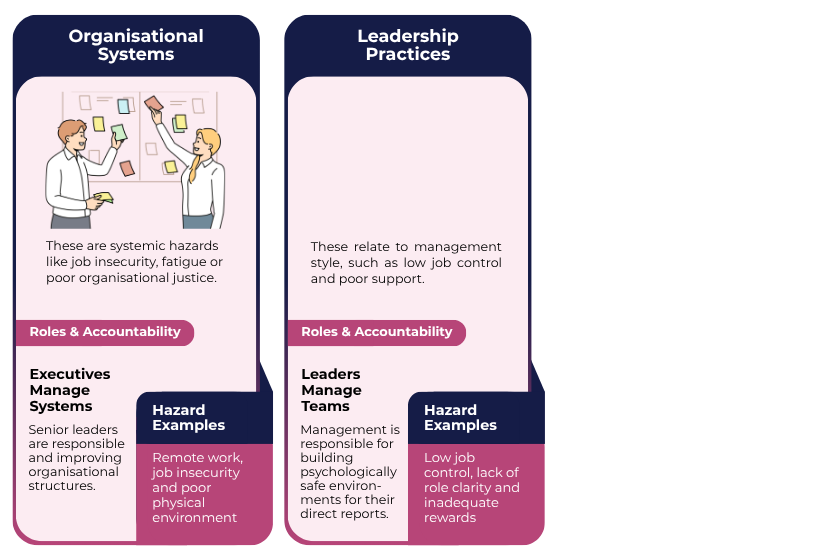
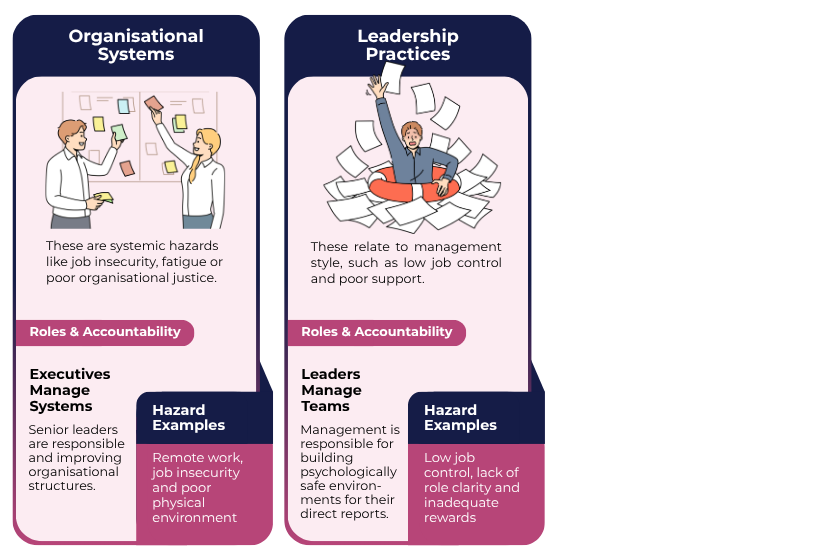
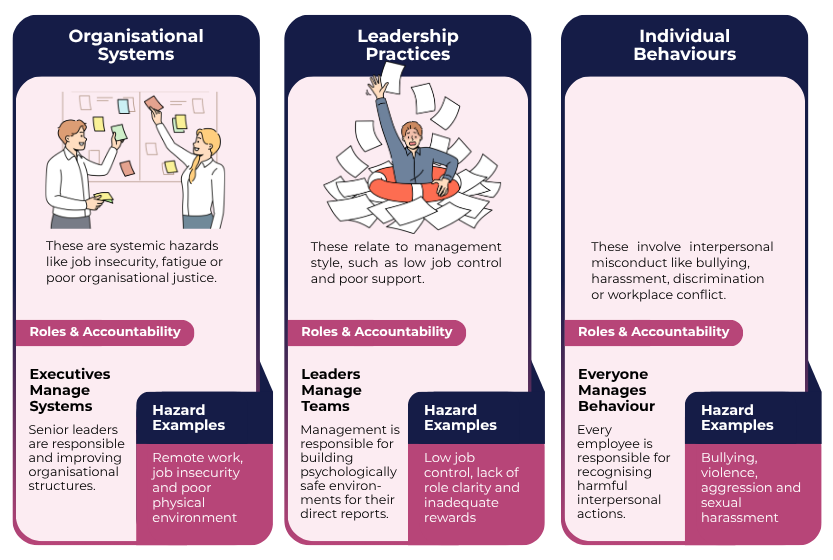
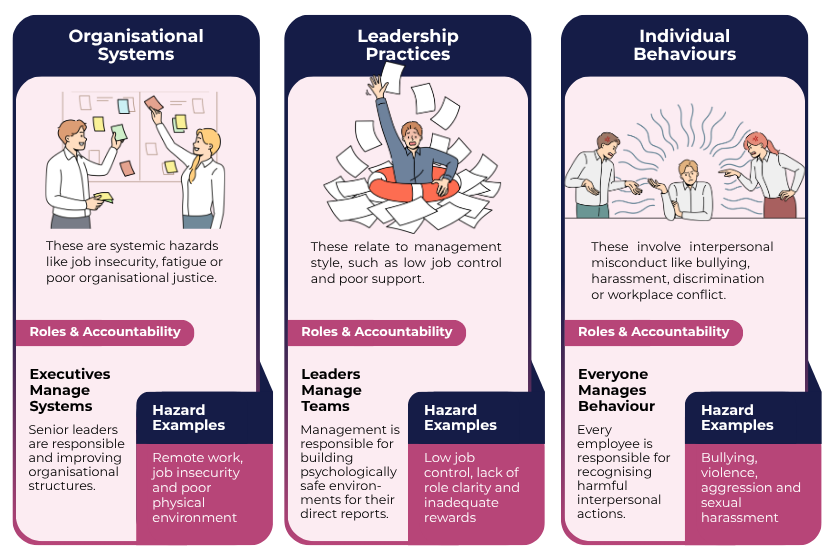
The Neon Shed Psychosocial Safety Framework breaks risk into 3 key focus areas so you know where to start and who's responsible. It addresses hazards directly at their source: whether that’s a systemic issue, a leadership gap or individual behaviour.

Explore The 3 Pillars
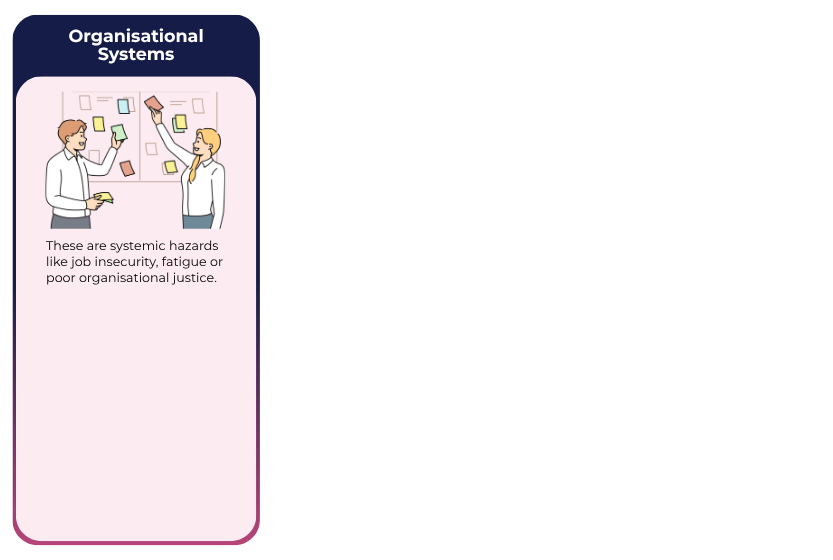
Organisational Systems
How work is designed and managed
Organisational systems form the backbone of your workplace and directly influence the safety, wellbeing and performance of your people. When these systems are unclear, inconsistent or poorly designed, they can create stress, uncertainty and disengagement across the workforce.
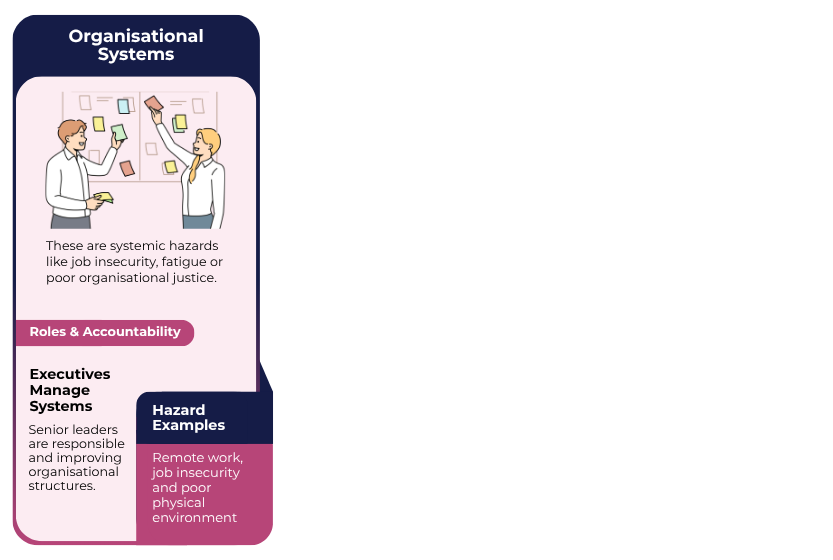
These hazards are embedded in the way work is structured, managed or resourced. They're not caused by individuals but by broader organisational decisions, policies and processes - and they require action at the system level.
Who's responsible:
Executives and senior leaders are primarily responsible for developing and improving these systems and structures. They set the foundations, and it's their responsibility to make sure these systemic issues are addressed proactively. People & Culture and WHS need to be at the table to support understanding, awareness, development and create strategy.
Related psychosocial hazards:
- Poor organisational justice (unfair, inconsistent or discriminatory management decisions and policies)
- Job insecurity (uncertainty about continued employment)
- Intrusive surveillance (excessive monitoring that erodes trust)
- Exposure to traumatic events or material
- Poor physical environment
- Remote or isolated work
- Fatigue (inadequate rest, excessive hours, poor roster design)
Why this matters:
When organisational systems are fair, consistent and supportive, they create the foundation for psychological and physical safety. Addressing these risks means reviewing and improving how work is designed, how decisions are made and how people are supported.
How we can help:
Psychosocial Risk Assessment
Identify systemic risks using internationally validated tools
Psychosocial Safety Intelligence Report
Strategic analysis and action plan using organisational data
Psychosocial Safety Framework Development
Build your organisation's tailored framework
Board & Executive Training
Understand legal obligations and compliance requirements
Policies & Procedures Development
Create compliant, practical policies
Worker Consultation Facilitation
Ensure genuine worker engagement
Incident Reporting Platform
Early detection and response system
Psychosocial Safety Health Check
Annual compliance reviews
Leadership Practices
How teams are led and supported
How leaders manage teams, set expectations and support their people has a significant impact on psychosocial safety. Leadership shapes day-to-day work experiences and plays a central role in how safe, supported and valued people feel at work.
When leadership practices are ineffective, they can increase stress, disengagement and confusion across the workplace.
Who's responsible:
Leaders and managers have the primary responsibility to adjust work demands, clarify roles, provide adequate support, manage change effectively and ensure fair recognition.
People & Culture has a big part to play in prevention through reward and recognition programs, induction and onboarding processes and clear role descriptions.
Related psychosocial hazards:
- High or low job demands (workload that's excessive, unpredictable or insufficient)
- Low job control (limited autonomy or decision-making authority)
- Poor support (inadequate guidance, resources or assistance from managers or peers)
- Lack of role clarity (unclear duties, expectations or reporting lines)
- Inadequate reward and recognition (effort not acknowledged or valued)
- Poor organisational change management (unclear communication, lack of consultation, inadequate support during transitions)
Why this matters:
These hazards often arise not from bad intentions but from a lack of skills, training or support. Many leaders are promoted based on technical expertise, without the people management capabilities needed to navigate the complexities of leading a team.
By equipping leaders with the right tools and strategies, organisations can build trust, improve communication and reduce psychosocial harm. Strong leadership practices contribute to healthier teams, clearer expectations and a more positive workplace culture.
How we can help:
Leadership Training
Build psychologically safe teams and manage demands effectively
Courageous Leader Launchpad
12-week intensive program for managers
Burnout Prevention Training
Help staff recognise early signs and take action
Psychosocial Safety Assist
Confidential support for leaders navigating challenges
Individual Behaviours
How people treat each other
Harmful behaviours are interpersonal actions that undermine psychological safety and contribute to a toxic or unsafe work environment. These behaviours are often persistent, subtle or normalised over time, making them difficult to detect until they escalate. They create stress, fear and disengagement, and can have a lasting impact on individuals and workplace culture.
Who's responsible:
Everyone, no matter what their role, is responsible for their actions and behaviours. We can't be physically unsafe at work, and we also can't be psychologically unsafe.
Related psychosocial hazards:
- Violence and aggression (physical or verbal threats, intimidation)
- Bullying (repeated unreasonable behaviour directed towards a worker)
- Harassment including sexual and gender-based harassment
- Discrimination (unfair treatment based on protected attributes)
- Conflict or poor workplace relationships and interactions
Why this matters:
While a single incident can cause harm, repeated or unmanaged behaviours often lead to serious outcomes such as psychological injury, high staff turnover or legal claims.
When it comes to conflict, bullying and harassment, there are often perceived grey areas and people don't know how to speak up when something doesn't feel right - they're afraid of escalating the situation.
How we can help:
Minimising Harmful Behaviours Training
Black and white the grey areas
Incident Reporting Platform
Confidential early reporting and response
Independent Investigation Services
Trauma-informed investigation of complaints
Psychosocial Safety Assist
Support for workers navigating difficult situations
Psychological Injury Recovery Support
Rehabilitation counselling for affected workers
Return to Work Planning & Support
Individual RTW plans and adjustments
Take Action
Ready to Use the Framework?
Access resources or connect with Neon Shed to implement the framework in your workplace.
Framework Downloads & Articles
Access our downloadable framework assets and practical guide articles.
Want updates delivered directly to your inbox?
Tailored Organisational Support
Partner with Neon Shed to embed the Psychosocial Safety Framework across your organisation.